


A single vowel shouldn’t cause this much confusion, but swap vs swop trips up even confident English speakers. Both words describe exchanging one thing for another, yet only one shows up in modern writing without raising eyebrows.
This guide walks through what each word means, where “swop” came from, how the two are used across different English-speaking regions today, and which one you should actually reach for in your own writing.
What Do Swap and Swop Mean?
Both swap and swop mean the same thing: to exchange one thing for another, either as a verb or a noun.
- Verb: “I’ll swap seats with you.”
“He swopped his lunch for a sandwich.”
- Noun: “It was a fair swap.”
“They agreed to a swop.”
There’s no shift in definition between the two spellings — a swap and a swop are the identical action. The only real distinction is which spelling shows up in which era, region, and register of English.
Get the full explanation of “Hassle vs Hustle: Meaning, Difference, Examples & Correct Usage“
Historical Roots: How “Swop” Emerged from “Swap”
The word traces back to Middle English swappen, which originally meant to strike or hit, likely tied to the old custom of sealing a deal or bargain with a handshake or slap. Over time, the meaning drifted from “striking a bargain” to simply “exchanging,” and the word settled into everyday use with that meaning.
Spelling wasn’t standardized in early English, so writers recorded words the way they sounded locally. In some parts of England, people used to say the short “a” sound in “swap” more like an “o,” and this way of speaking led to the word being spelled as “swop.” Both spellings were used together for a long time, just like how “colour” and “color” are spelled differently in British and American English.
Once dictionaries and formal education began standardizing spelling in the 18th and 19th centuries, “swap” pulled ahead as the accepted form almost everywhere, while “swop” held on mainly in British usage, and even there, it’s fading.
Swap vs Swop: Key Differences at a Glance
| Feature | Swap | Swop |
| Meaning | Exchange one thing for another | Exchange one thing for another |
| Pronunciation | /swɒp/ | /swɒp/ (identical) |
| Region | Global standard (US, UK, Australia, India, etc.) | Chiefly British, increasingly rare |
| Formality | Neutral, works in any register | Feels old-fashioned or literary |
| Dictionary status | Standard entry everywhere | Listed as a variant, often labeled “British” or “dated” |
| Best use case | Everyday writing, business, academic, digital content | Historical fiction, nostalgic or regional British writing |
The takeaway from the table is straightforward: swap and swop share identical meaning and pronunciation, but only swap carries no risk of looking outdated or region-specific.
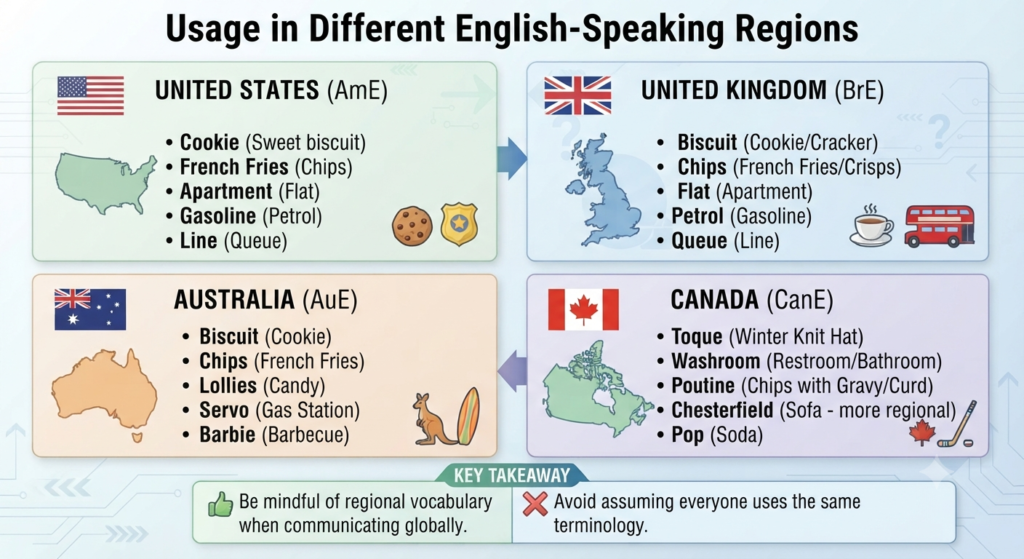
Usage in Different English-Speaking Regions
United States
American English doesn’t really entertain “swop” as an option. Merriam-Webster and the American Heritage Dictionary list only “swap,” and seeing “swop” in US writing typically reads as a typo rather than a legitimate variant.
United Kingdom
Britain is where the two spellings genuinely coexisted for a stretch of time. Older British texts, including some Victorian-era writing, used “swop” comfortably. Modern British publishing, journalism, and everyday writing have shifted heavily toward “swap,” though “swop” still turns up occasionally in informal or nostalgic contexts.
Australia, New Zealand, and Other Commonwealth Countries
These regions historically leaned on British spelling conventions, and “swop” did appear in older Australian newspapers and children’s literature. That said, contemporary usage in Australia, New Zealand, India, South Africa, and similar regions has converged on “swap” as the standard.
Here’s a closer look at “Incoming, Upcoming, Oncoming: What’s Actually Different (With Examples)“
Real-Life Usage Examples
Seeing both words in context makes the difference easier to internalize:
- “Let’s swap our phone numbers before we leave.” (natural, modern)
- “The children swopped comic books at recess.” (older British style)
- “We swapped our shifts so I could attend the appointment.”
- “My sandwich for her salad was a fair swap”
- “In the 1950s, kids used to swop marbles at school.”
Notice how “swopped” and “swop” both feel tied to a specific era or setting, while “swap” and “swapped” slot naturally into any sentence, regardless of when or where it’s being written.
What Dictionaries & Style Guides Say
Major dictionaries and style authorities are consistent on this point:
- Cambridge Dictionary includes “swop” but notes it’s more common in British English and not as widely used, suggesting “swap” as the preferred and standard spelling. .
- Merriam-Webster only recognizes “swap,” reflecting American English norms.
- Collins English Dictionary labels “swop” as chiefly British and notes it appears less frequently than “swap.”
- Style guides like AP, Chicago, and the Guardian’s house style all suggest using “swap” in modern writing, while reserving “swop” for direct quotes from older sources.
If there’s a single rule to remember: every major English dictionary treats “swap” as the primary, recommended spelling, with “swop” noted as a secondary or historical variant rather than an equally valid modern choice.
Modern Usage in Everyday English
“Swap” has become deeply embedded in everyday and technical vocabulary well beyond casual conversation. You’ll see it in:
- Tech contexts: swap SIM cards, disk swap, memory swap
- Finance: currency swap, asset swap, swap agreements
- Casual speech: swap seats, swap stories, swap recipes
- Digital culture: clothing swaps, book swaps, skill swaps
“Swop,” by contrast, rarely appears in any of these modern categories. It survives mostly in historical fiction, quoted archival material, or writing deliberately styled to sound old-fashioned.
Which One Should You Use Today?
Use “swap” in nearly every situation. It’s the standard spelling in American, British, Australian, and international English, and it reads as clear and current no matter your audience. Save “swop” only for quoting historical text or intentionally recreating an older British voice.
Why Clarity and Consistency Matter
Small spelling choices shape how professional or careless your writing looks. Picking one spelling and sticking with it, rather than mixing “swap” and “swop” in the same document signals attention to detail. For international audiences especially, an unfamiliar spelling like “swop” can momentarily break a reader’s flow, even if the meaning is technically the same.
Consistency also matters for anyone writing for search visibility. Since far more readers search for and expect “swap,” aligning your spelling with reader expectations keeps writing accessible and reduces confusion for non-native speakers learning the language.
See how dictionaries define the difference on Merriam-Webster Usage Notes
Real-World Examples of Swap and Swop
A side-by-side look at natural versus dated phrasing:
| Natural (modern) | Dated (older British) |
| Let’s swap seats. | Let’s swop seats. |
| They swapped gifts at the party. | They swopped gifts at the party. |
| I want to swap my old phone. | I want to swop my old phone. |
| We swapped ideas during the meeting. | We swopped ideas during the meeting. |
Self Assessment Section
Test your understanding with these quick prompts:
- Which spelling would you use in a business email to an international client?
- Is “swop” acceptable in American English writing? Why or why not?
- Fill in the blank: “The two friends ______ jackets for the day.” (swap/swopped)
- True or false: Swap and swop have different meanings.
- Which spelling would you expect to see in a 1960s British novel?
If you answered “swap,” “no, not in modern US English,” “swapped,” “false,” and “swop”, you’ve got the distinction down.
Common Mistakes / Confusions
- Assuming they mean different things: They don’t; the difference is spelling and regional preference only.
- Using “swop” in American English writing: This reads as an error to most US readers.
- Mixing both spellings in one document: Inconsistency looks unpolished, even though both are technically valid.
- Treating “swop” as more “correct” or formal: It isn’t; it’s simply older and regionally narrower.
- Forgetting that pronunciation is identical: The spelling shift doesn’t change how the word sounds.
Is It Combating or Combatting? The One-T Rule Explained
FAQs
Swap vs swop meaning; is there a difference?
No. Both words mean “to exchange one thing for another.” The only difference is spelling and regional usage, not meaning.
What does the Oxford Dictionary say about swap vs swop?
Oxford-affiliated dictionaries recognize “swop” as a British variant spelling but list “swap” as the standard, preferred form in modern English.
Can you give examples of swap vs swop in sentences?
Yes — “I’ll swap seats with you” is standard modern usage, while “I’ll swop seats with you” reflects older or regional British style with identical meaning.
What do people on Reddit and forums say about swap vs swop?
Most online discussions agree that “swap” is the modern, globally understood spelling, while “swop” is seen as a quaint British holdover rarely used in casual online writing.
Is there a grammar rule that governs swap vs swop?
No grammar rule separates them, it’s purely a spelling variant issue, similar to “color” versus “colour,” not a difference in tense, part of speech, or sentence structure.
What’s the correct past tense: swapped or swopped?
“Swapped” is the standard past tense used almost everywhere; “swopped” is the older British past tense form, now rarely seen outside historical writing.
Is swop British, and is it in the Oxford Dictionary?
Yes, “swop” is primarily associated with British English and does appear in Oxford and Cambridge dictionaries, but both label it as a variant rather than the primary spelling.
How do you pronounce swap and swop?
They’re pronounced identically, /swɒp/, so pronunciation never helps you decide which spelling to use.
Conclusion
Swap and swop describe the exact same action, trading one thing for another, so the real decision isn’t about meaning at all. It’s about which spelling fits your audience and era. For virtually all modern writing, whether it’s a text message, a business email, or a blog post, swap is the safe, standard, globally understood choice. Reserve “swop” for historical quotes or deliberately old-fashioned British flavor, and you’ll never second-guess your spelling again.
